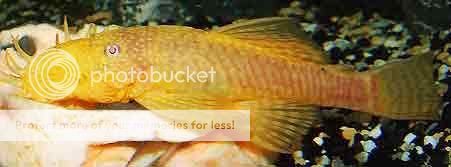


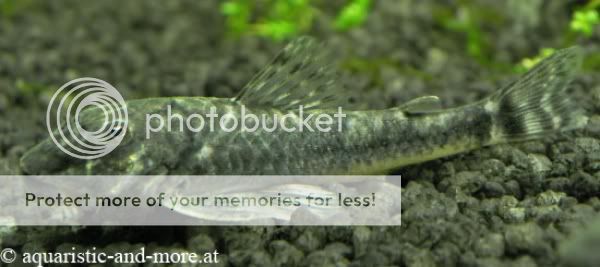
Young male (or perhaps a female) Bristlenose Pleco
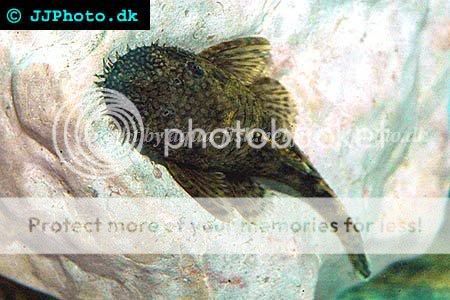
Clown Pleco
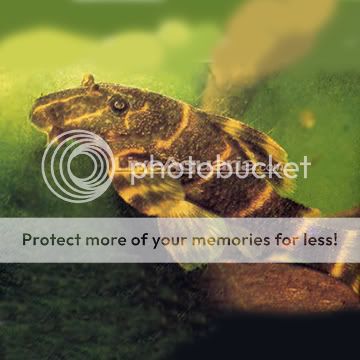
Common Pleco
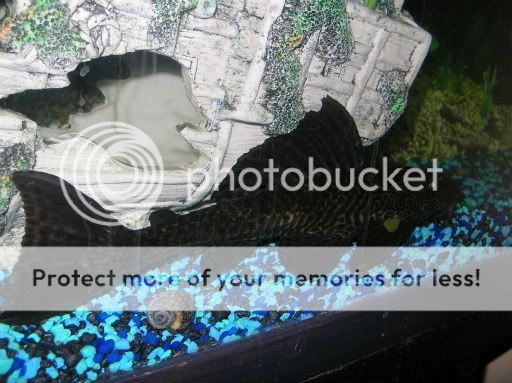
Pitbull Pleco
Clown Pleco
Common Pleco
Pitbull Pleco
Tank Size~
Bristlenose pleco's tend to stay between 4-8 inches (8 being a monster!). Albino's are usually around 4 inches, but I have seen some pushing 6 or 7. These are a larger type, though, and not all Albinos are of the some species as these larger ones. A minimum of 30 gallon for a single fully grown Bristlenose with tank mates is recommended, though they can be kept in 20 longs (for the floor space) with smaller, low-bioload fish, with diligent water changes. 20 longs are also good for breeding purposes.
There are actually a few different species listed as "Clown Pleco's," but they are all similarly sized, at around 4 inches. A 20 long is the smallest tank they should be housed in, due to their bioload.
Common Pleco's are the cheapest and most accessible pleco out there. They are what alot of people call "tank busters" and can get a staggering 24+ inches long. 75 or more gallons is the smallest tank for this fish, though alot of people say 90 gallons or more. With large, big poopers like these guys, you can never have too much space.
The Pitbull Pleco is one of the smallest Pleco's out there, and a pretty hard find. 20 gallons is recommended, as they are a schooling fish (surprisingly), but I had no problems with a single Pitbull in a 10 gallon (other then my own carelessness, but we'll leave that part out lol). They stay around 3 inches long.
Feeding~
The Bristlenose, Clown, and Pitbull Pleco's are all happy on algae alone, provided they have enough to live on in the tank. If there is little or no algae in the tank, supplement with algae wafers, and fresh veggies, such as squash, zucchini, green beans, shelled peas, letuce (not iceburg, as it had little nutritional value), and cucumbers. Some pleco's have a sweet tooth, and may enjoy melons also.
Common Pleco's actually go from being herbivores to omnivores when they are adults. They can get quite aggressive, and are known to eat the slime coat off of other fish, particularly those that are large and slow moving. They should be fed large amounts of food every day to help prevent this. Buy an algae wafer that has rather high amounts of protein, and feed them with the wafer stuck inside veggies.
Your pleco's tummy should not be flat or rounded in, but should look quite plum when viewed from the side.
Tank Mates~
Bristlenose's can kept with just about anything, as long as its tank mates dont n** at their bristles. They can be kept with anything from small Guppies and Tetras to large Cichlids. They can hold their own pretty well, and have spines and spikes around their gills, that they can flare out, lsort of like a Betta, when they mean business. Care should be taken that they are not bullied to the point where they are getting hurt, or not eating.
Clown Pleco's, being quite shy, are not very well suited for a boisterous tank. Smaller, middle and upper level fish, or slow moving, larger fish, like Angels and Discus, are best.
Common Plecos can be housed with just about anything, when they are younger, but when they get older and a bit more aggressive (which might not even happen), they should be house with larger fish that can put them in their place. Cichlids are pretty good tank mates, as Commons will not take crap from the Cichlids and the Cichlids wont take crap from the Pleco. Care should be taken to make sure no one gets seriously hurt, or bullied too much. If things dont calm down in a few weeks, you may want to consider rehoming who ever the trouble maker is.
Pitbull Plecos, while not aggressive (in my short experience), will not take any bullying. They wont fight back, or even hide, but rather will just relocate themselves. They should not be kept with fish that will eat them. Dont forget, they are schooling fish, and need a few buddies of their own kind.
Decor~
All Pleco's need driftwood. It provides hiding places and also aides in digestion. Live plants will help water quality, as Pleco's poop A LOT, but they are not necessary. The smaller guys like plants with leaves big enough that they can rest on. Caves and inverted terra cotta pots are also good to have, especially if you are looking to breed.
Notes~
Bristlenose Plecos get their names from the 'bristles' the males develope on their faces. Females can also get these, but they tend to not be so big, and are localized around the "chin" area. Females usually do not get bristles.
The bristles are thought to be used to detect water movement during breeding, as high water flow reduces the likelihood the eggs will fungus and die, and also give dad a little help, as he uses his fins to fan water over the eggs.
As I learn more about other types of pleco's I will add them here. Also, I would like suggestions as to which ones you would like! If you have anything to add, please feel free to do so wink